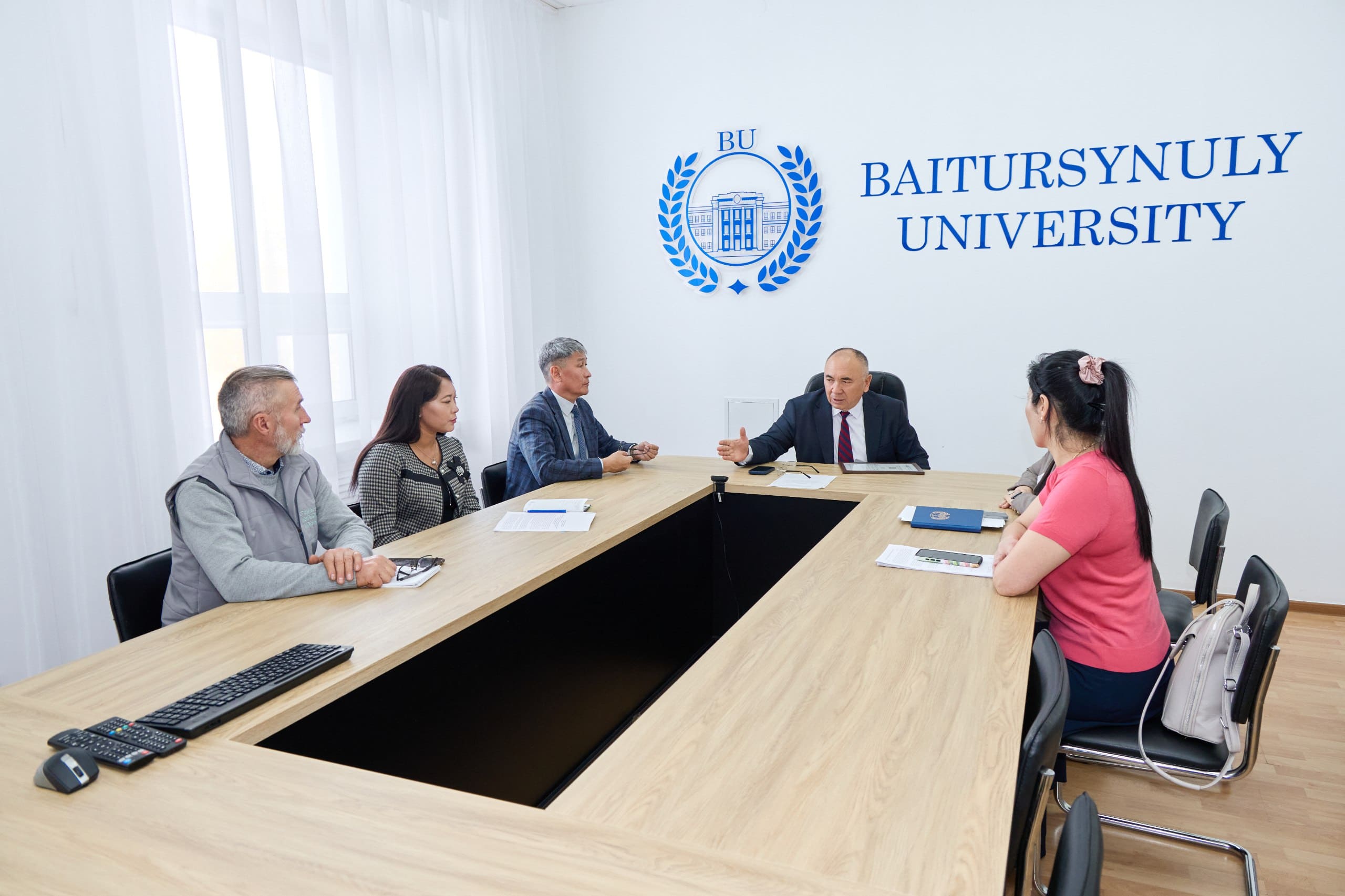
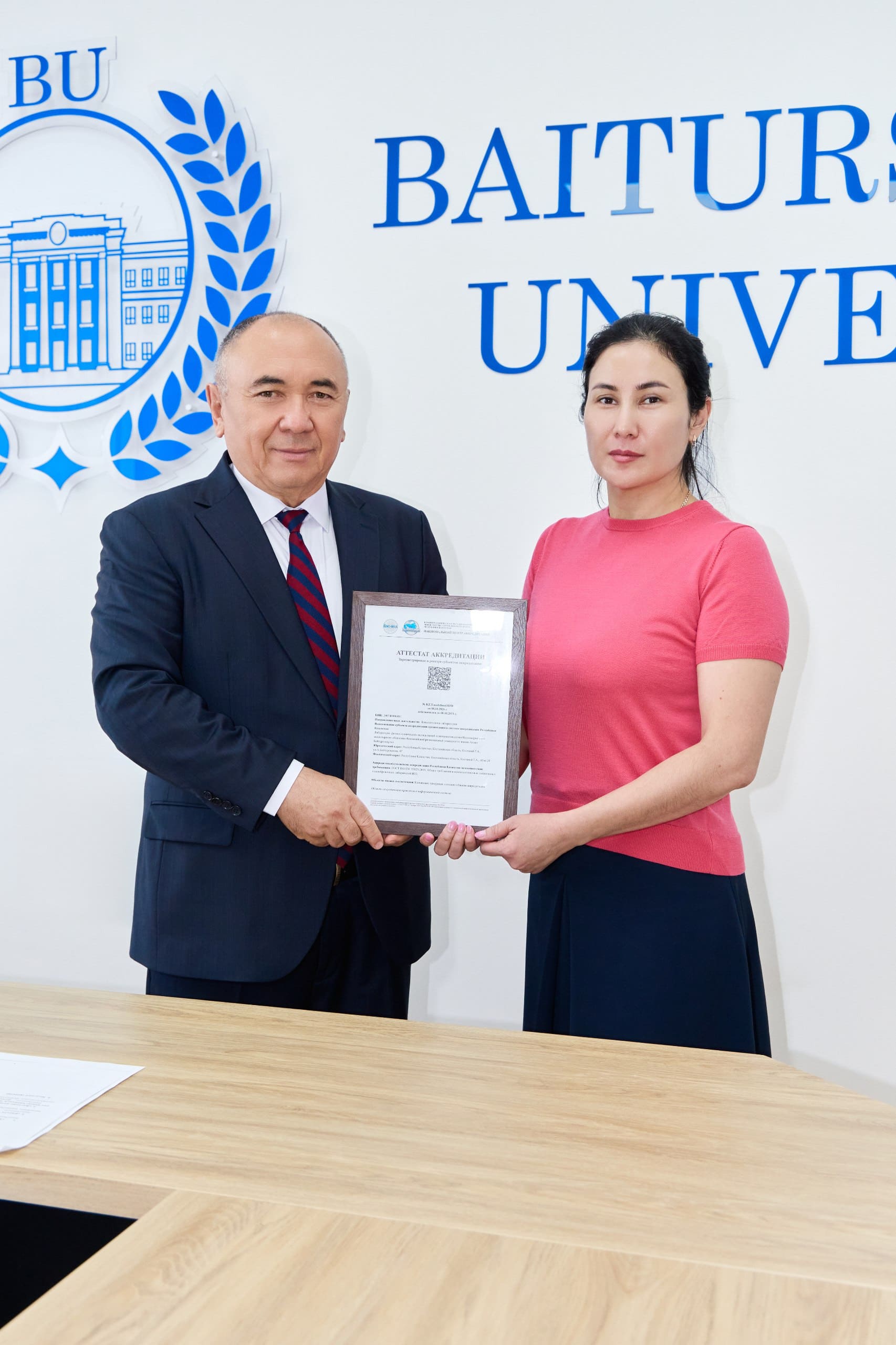
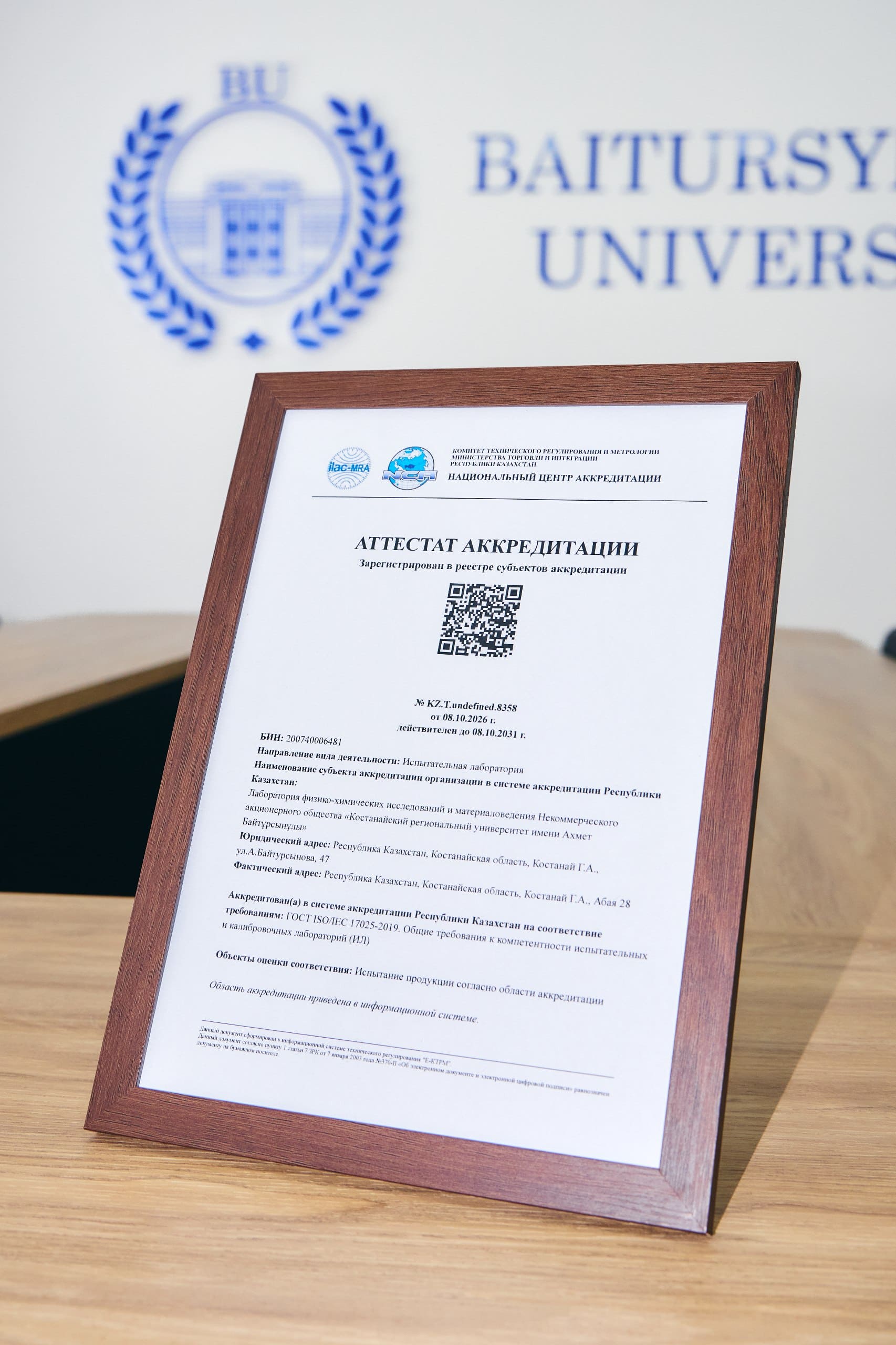
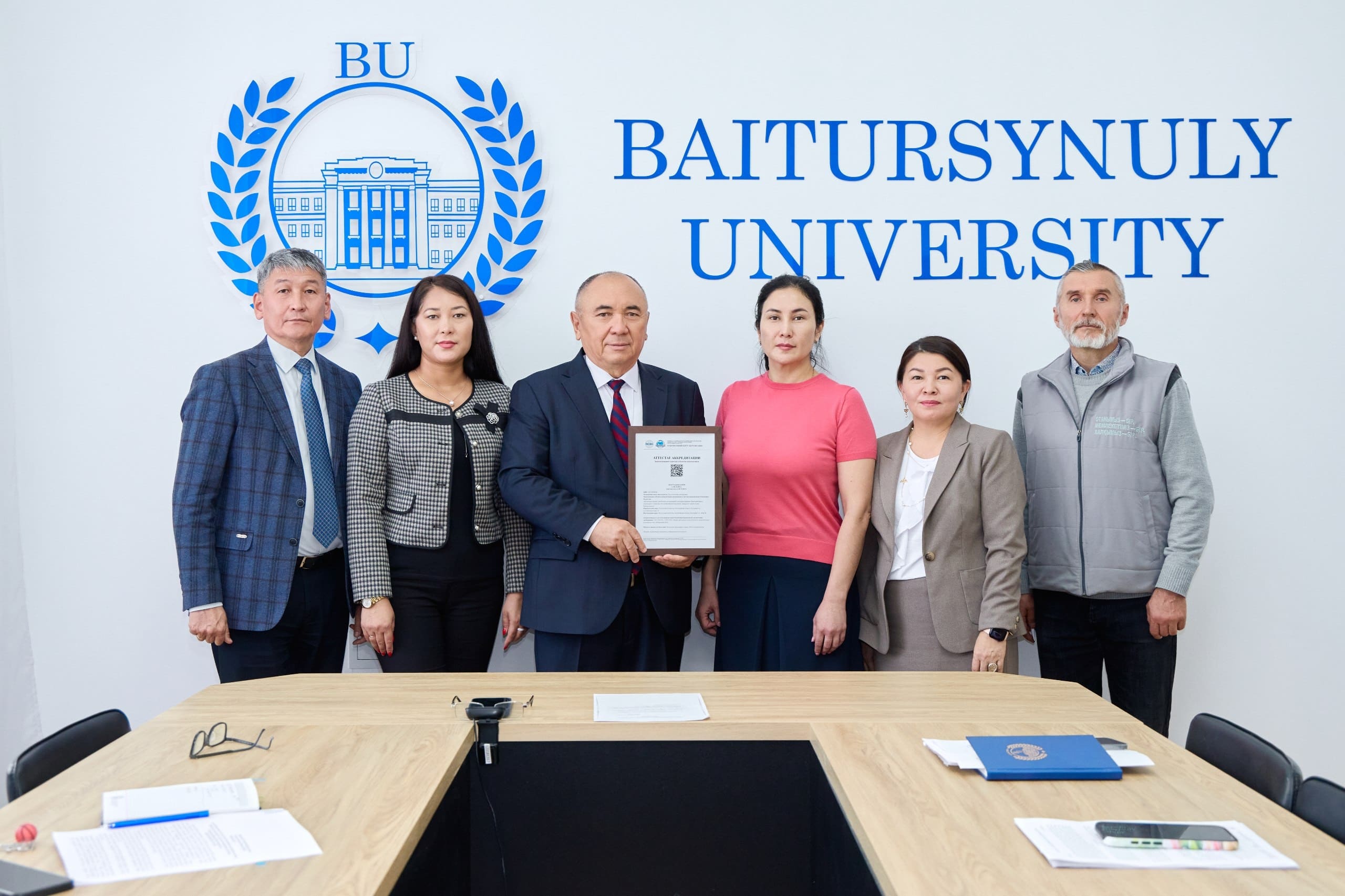
Scientific research requires not only modern technology and equipment but also strict adherence to quality standards. Akhmet Baitursynuly Kostanay Regional University has taken another important step in this direction: on October 8, 2026, its Testing Laboratory for Physicochemical Research and Materials Science received an accreditation certificate.
The laboratory, part of KRU’s Research Institute of Innovative Technologies, is officially accredited under the national accreditation system of the Republic of Kazakhstan. Its operations comply with GOST ISO/IEC 17025-2019, “General requirements for the competence of testing and calibration laboratories”. The certificate is valid until October 8, 2031.
Accreditation followed an assessment of the laboratory conducted from August 18 to 20, 2026. No nonconformities with the standard’s requirements were identified. This confirms that the laboratory meets the established criteria for quality and technical competence.
The accreditation reflects the university’s sustained efforts to develop its research infrastructure, upgrade laboratory facilities and improve research quality.
This work forms part of the scientific and technical programme BR24992785, “Organisation and Conduct of Comprehensive Research to Ensure the Sustainable Development of the Agro-Industrial Sector of Kostanay Region, Including the Establishment of a Research and Technology Centre”. The programme is being implemented in 2024–2026 through programme-targeted funding.
The programme is led by Aliya Yskak, Director of the Research Institute of Innovative Technologies at Akhmet Baitursynuly Kostanay Regional University.
Beyond formally confirming compliance with established requirements, the accreditation marks an important achievement in developing the university’s scientific capacity, strengthening its research infrastructure and improving the quality of laboratory research.
It provides a foundation for the further development of research projects and strengthens the university’s role in addressing the region’s pressing challenges, including those facing the agro-industrial sector.