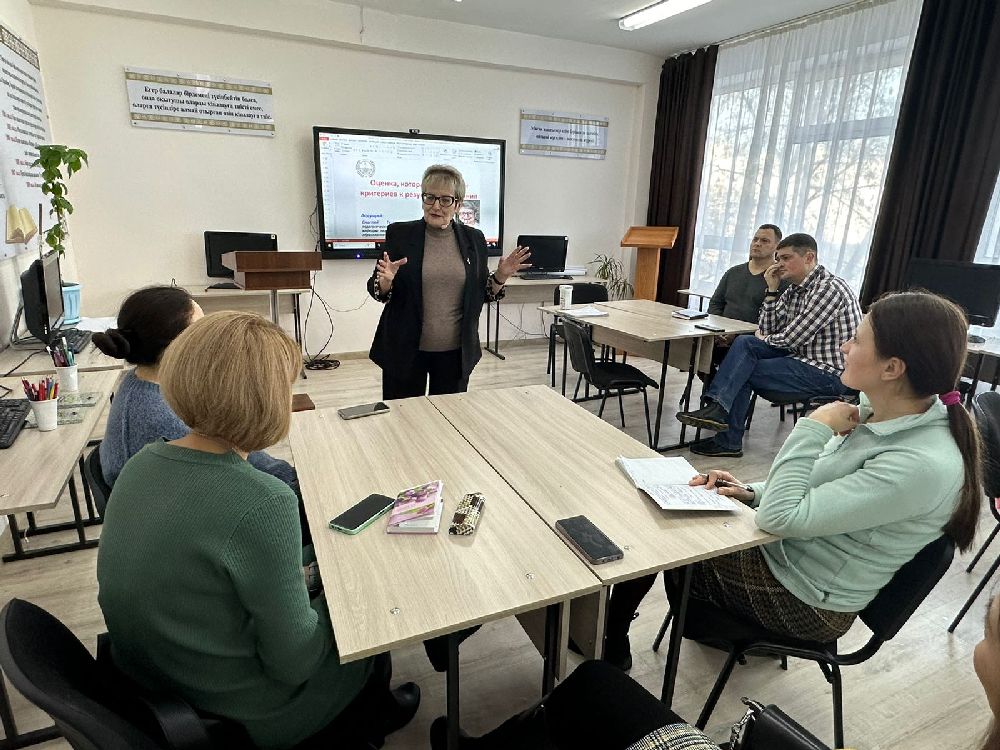
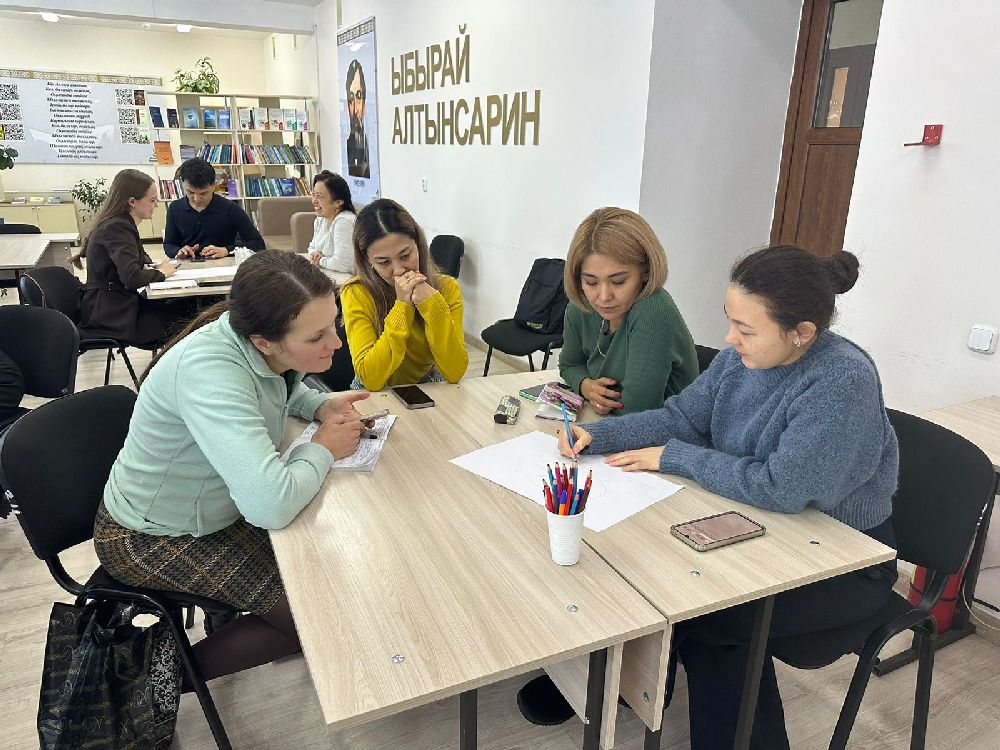
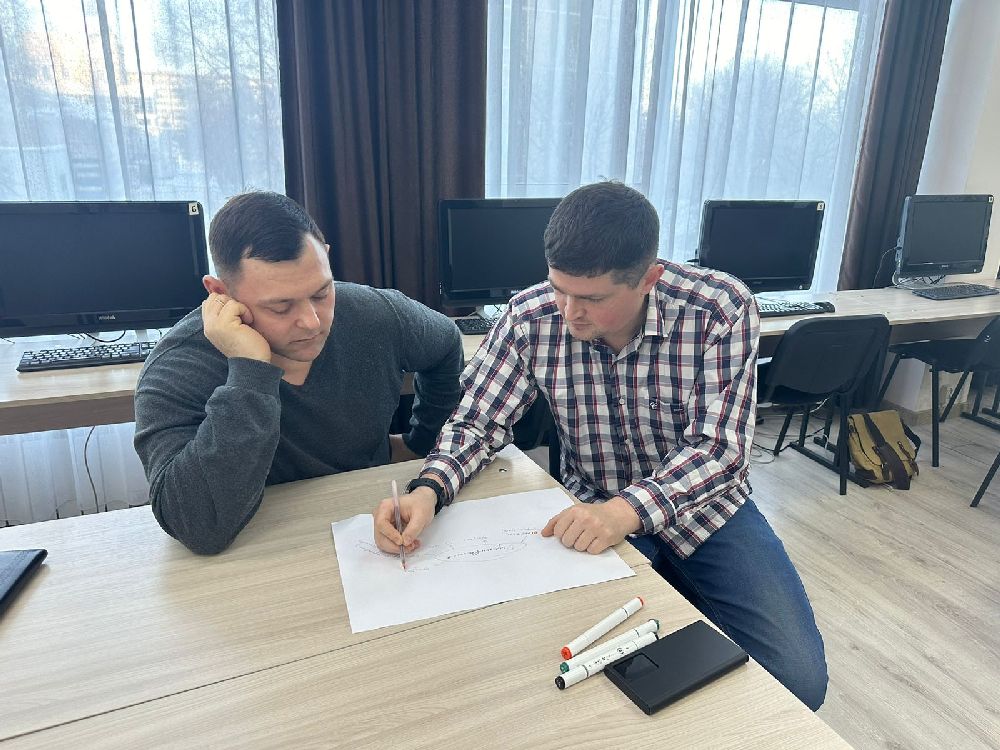
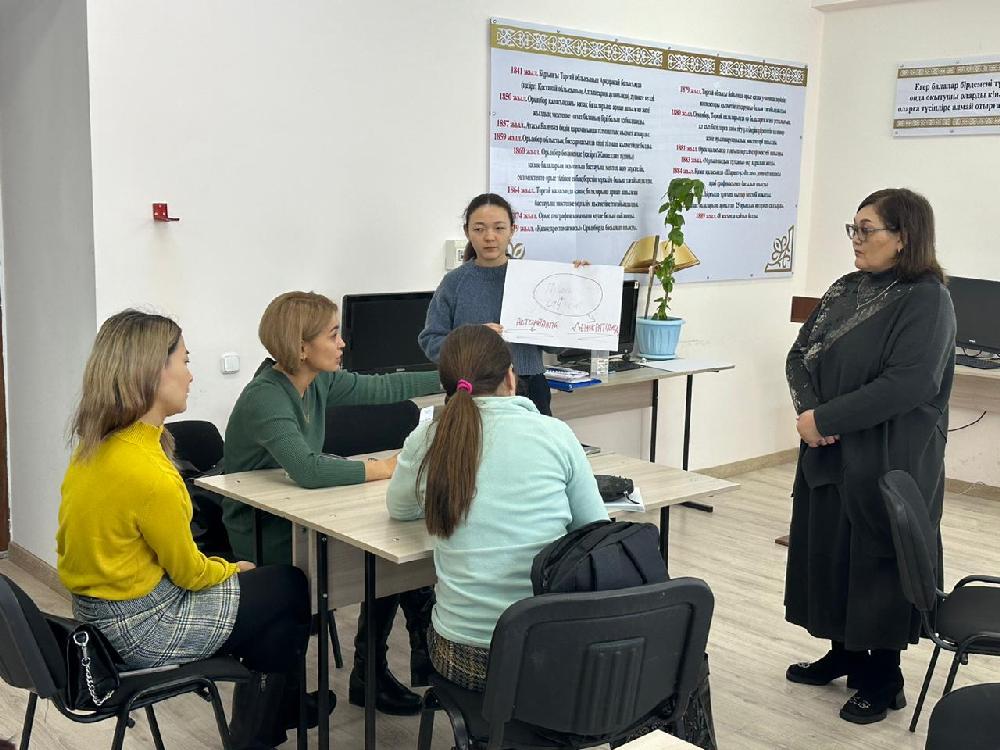
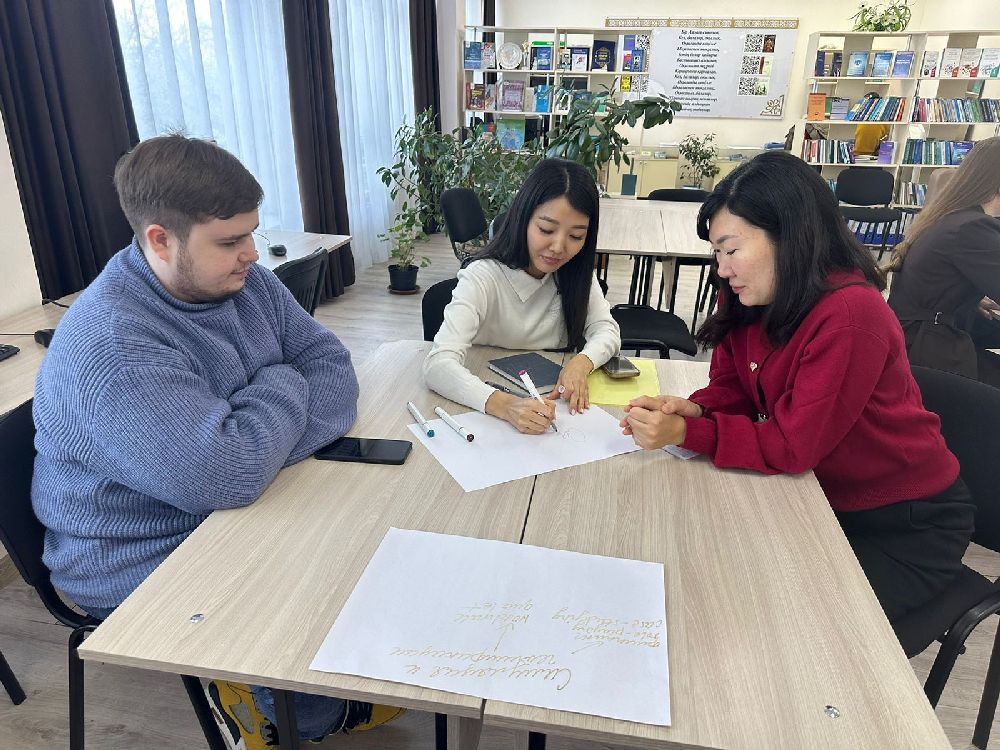
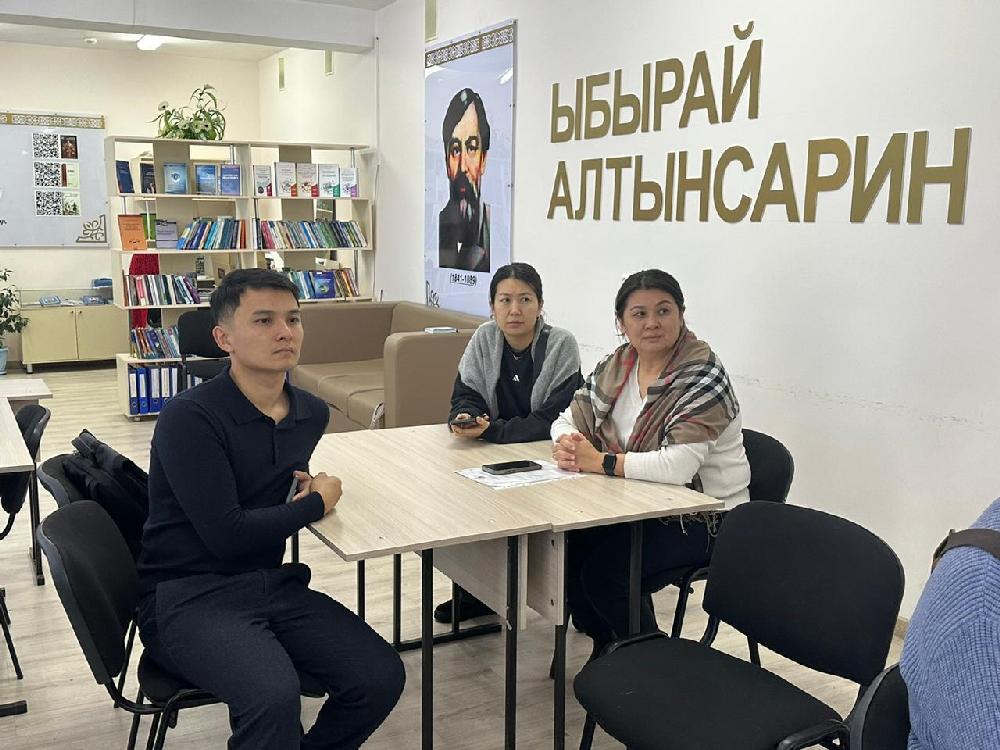
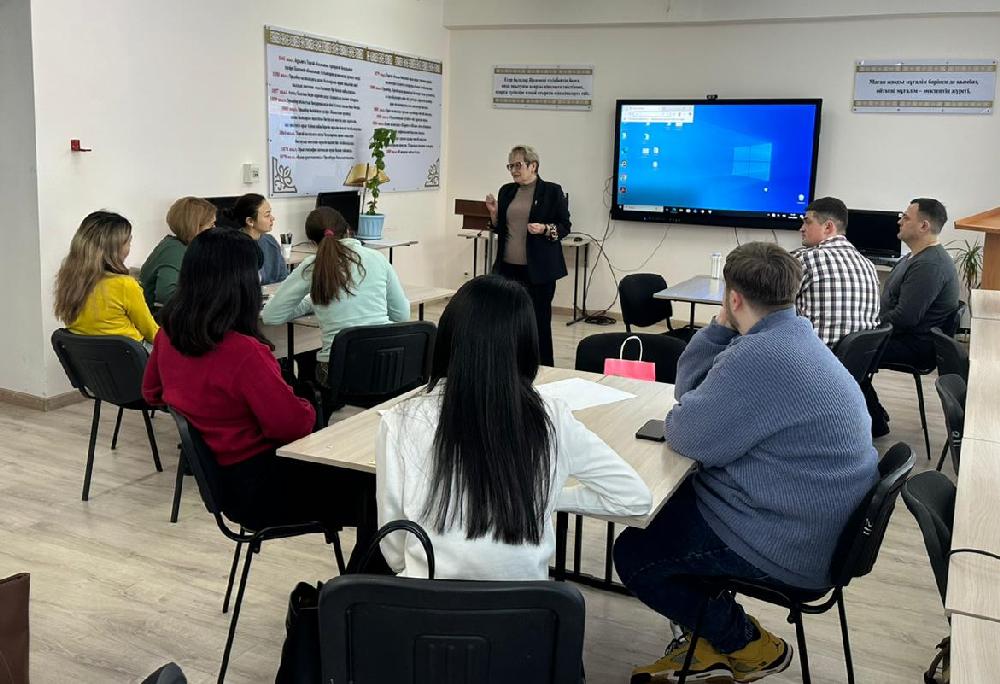
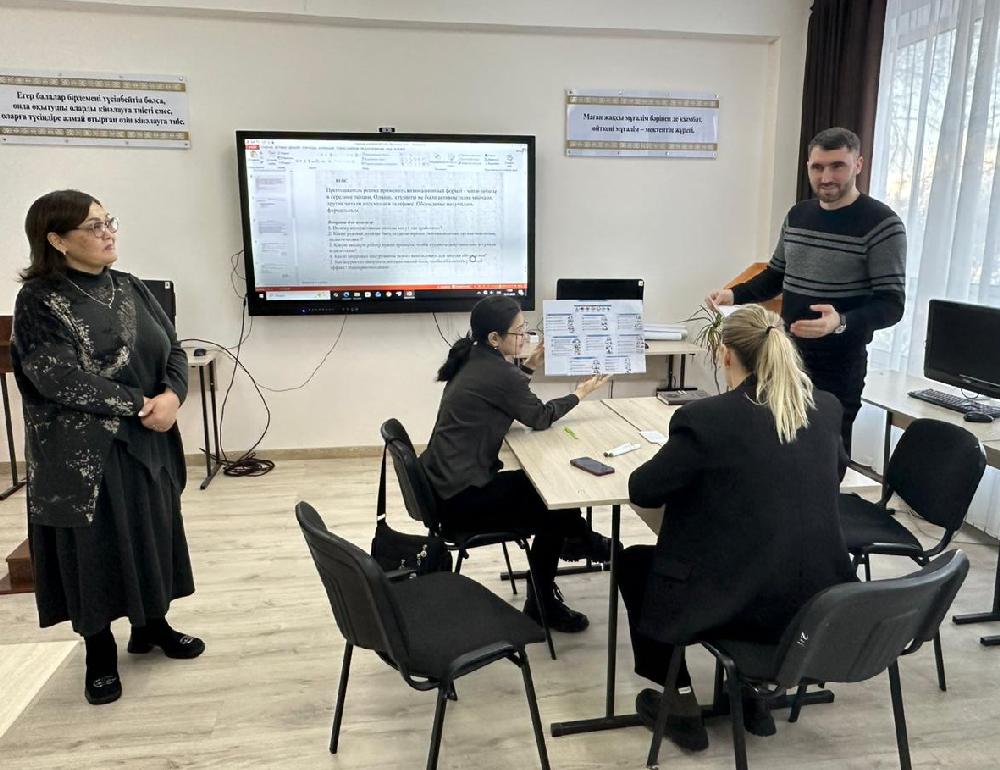
Today, as part of the Winter School, a seminar titled “Modern Technologies in Teaching and Learning at Higher Education Institutions” and a master class “Assessment That Works: From Criteria to Learning Outcomes” were held at the Pedagogical Institute of KRU.
The seminar brought together early-career lecturers, while the keynote speaker was an experienced educator — Bibikul Utegenova, Candidate of Pedagogical Sciences and Associate Professor of the Department of Pedagogy, Psychology, and Special Education.
The seminar focused on modern teaching technologies in higher education, methods for increasing student engagement and interest in the learning process, and the analysis of various practical cases. Participants also discussed traditional and contemporary approaches to teaching.
According to the seminar participants, a university lecturer must develop in step with the times, combining innovative methods with traditional ones.
The main goal is to engage students and take into account their individual potential.
As noted by Bibikul Mazanovna:
“Today we are moving toward student-centered education, where the student, their active role, independence, and development of critical thinking are at the core of the learning process. That is why a lecturer must be innovative while relying on professional experience.”
The seminar concluded with a master class led by Tatyana Smagliy, Candidate of Pedagogical Sciences and Associate Professor of the Department of Pedagogy, Psychology, and Special Education, on the topic “Assessment That Works: From Criteria to Learning Outcomes.”
During the master class, participants discussed key questions, including:
When addressing the question “Is assessment necessary?”, participants unanimously agreed that it is. According to them, assessment is a key motivational factor.
Students often live “from one exam session to another,” and the absence of assessment can negatively affect learning outcomes, leading to a decline in academic discipline.
Overall, the events were engaging, interactive, and discussion-rich.
Experienced educators willingly shared their expertise with young lecturers, offering valuable guidance and mentorship.